


A letter-writing kit doesn't need to be fancy. A shoebox holding a pad of paper, a pen that behaves, and a strip of stamps will carry you through a year of notes, thank-yous, and birthday wishes.
What separates a kit you reach for every week from one that quietly gathers dust is fit: paper that suits your handwriting, envelopes the right size for that paper, and a few extras you will genuinely use. Here are ten essentials to gather before you sit down to write your first letter.
1–2. Paper That Feels Good Under Your Hand
Start with the paper, because everything else follows from it. A pen that skips across cheap copier stock may glide beautifully over a slightly heavier sheet, and an envelope too small for your favourite pad will sit unused in a drawer.
Writing paper
Look for A5 or half-letter sheets in the 80 to 100 gsm range. That weight feels like stationery rather than printer paper, but folds without cracking. Choose lined sheets if your handwriting drifts downhill, blank if you write large or like to sketch a margin. A pad with a tear-off edge keeps finished letters tidy; loose sheets in a folder work just as well.
Notecards
Flat cards suit the days when you have three sentences to share and no more. Buy a box that comes with matching envelopes so you are never hunting for a pair at the last minute. A5 folded cards give you more room and feel a touch more formal; 5x7 cards handle a proper short letter without tempting you into a long one.
3–4. Pens You Actually Trust
Two pens are usually enough: one you can rely on without thinking, and one that makes writing feel like a small occasion.
For the everyday pen, choose a gel pen or fine-liner with quick-drying ink in black or blue, and buy two or three identical ones. Pens disappear. A kit with an empty pen loop slowly becomes a drawer of loose odds and ends.
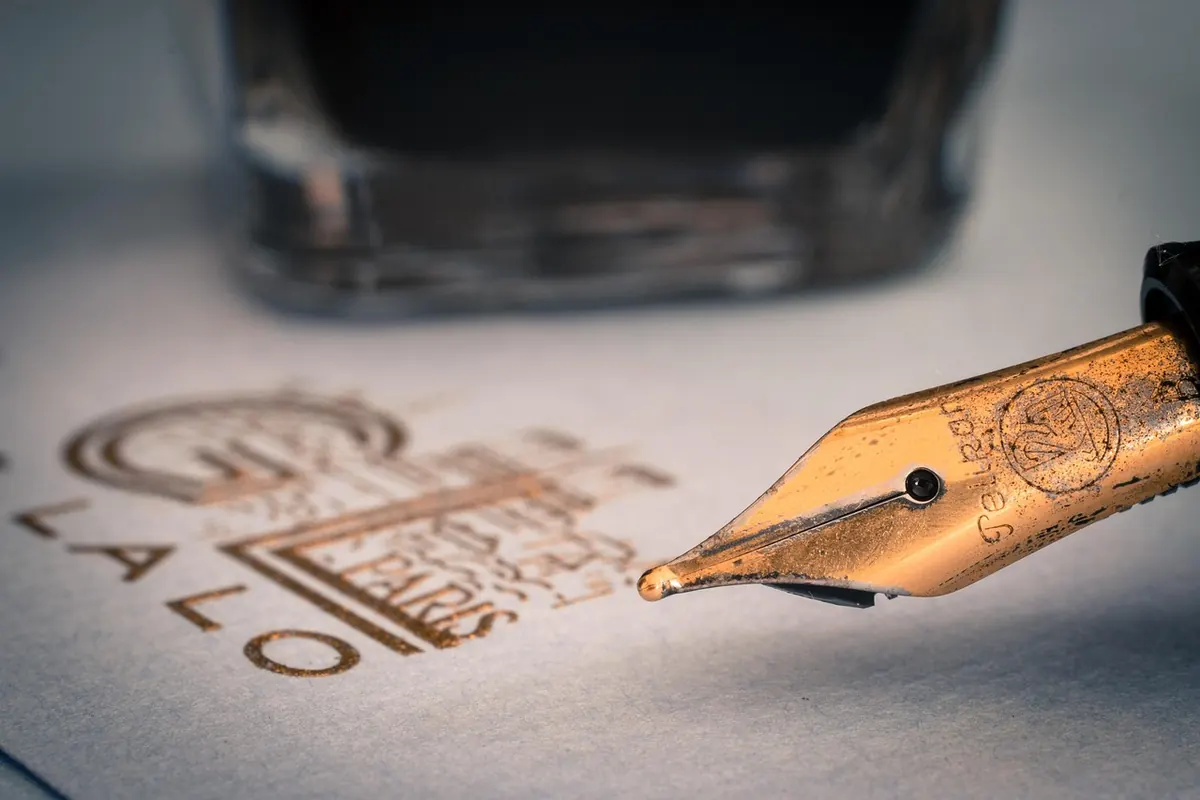
Your second pen can be slower and more enjoyable: a fountain pen with a smooth medium nib, a coloured ink for dates and greetings, or a brush pen for headings. Test any new ink on your chosen paper first, since some pen-and-paper combinations feather or bleed through to the other side. If you are left-handed or write quickly, drying time matters more than line width, and resting your hand on a scrap sheet as you move down the page saves a lot of smudging.
5. Envelopes That Fit and Arrive Intact
Match envelopes to the cards and paper you bought. A2 notecards fit A2 envelopes, 5x7 cards fit A7, a sheet of A4 folded in half fits a C5, and the same sheet folded in thirds fits a DL envelope, sold as a #10 in the US. Buying 25 at a time stops you rationing them.
Sturdier stock, around 100 to 120 gsm, survives sorting machines with fewer creases. Self-seal envelopes have a peel-off strip; gummed ones need a light dampening and hold firmly once closed. One thing worth checking before you commit to a whole box: square, oversized, or very small envelopes sometimes cost more to send or need extra handling. Ask at the counter or check your postal service's rules so there are no surprises later.
6–7. Postage and Addresses, Sorted Before You Start
Buy current stamps from your postal service rather than a reseller, and keep them inside the kit so posting a letter never becomes a separate errand. Rates change, so confirm the price when you buy rather than trusting an old memory. A small tin or the front pocket of your pouch holds them neatly. If you write to friends abroad, keep a few international stamps on hand or a note of the current overseas rate tucked in with them.
Then decide how you will keep addresses. A slim notebook with names, addresses, and a line about what you last wrote makes a surprising difference, because you can see at a glance who is overdue for a reply. Printed return-address labels are a shortcut if you dislike writing your own address twice on every envelope.
8–9. Extras That Make a Letter Feel Like a Gift
This is where a plain note becomes something worth keeping. A few flat, lightweight items are all you need:
- Washi tape for sealing a flap or running a strip along the edge of a card
- A sheet of small stickers, useful for sealing the back of an envelope
- A pressed leaf, a photo, a tea bag, or a ticket stub slipped in as a small surprise
- A fine-tip pen for addressing envelopes neatly, separate from your writing pen
Then pick one signature touch and let it be yours. A return-address rubber stamp, monogram stickers, or a wax seal all do the same job: they tell the recipient, before they read a word, who it is from. If you use sealing wax, keep the seal thin and flexible. Thick wax can jam sorting machines and may cost extra postage.
10. Something That Holds It All Together
A shallow box with a lid, a biscuit tin, or a zip pouch works equally well. Envelopes stacked upright make their own dividers; otherwise, add a couple of card dividers or paper clips to separate paper from cards. Keep everything flat, and stick a note on the lid listing what runs out first, usually stamps and envelopes.
It also helps to build one small portable version: five sheets of paper, five envelopes, two stamps, and one pen in a slim folder. That kit lives in your bag, ready for a spare twenty minutes in a café or on a train.
Print or copy this list if you like a checklist to work from:
- Writing paper, A5 or half-letter, 80–100 gsm
- Notecards with matching envelopes
- An everyday pen, bought in twos
- One special pen or ink colour
- Envelopes in two sizes
- Current stamps, including a couple for overseas mail
- An address notebook or return-address labels
- Washi tape and small stickers
- One signature touch: rubber stamp, seal, or monogram stickers
- A box, tin, or pouch to keep it all in
Now Write the First One
Choose one person. Not the friend who owes you a reply, and not the relative you feel you should write to. Pick someone whose name makes you smile, then write three sentences: what you are doing, something you remembered about them, and a question. Address the envelope before you write the letter, so sending it doesn't stall at the last step.
Short letters get sent. Long ones sit half-finished on the desk for a month. Set aside twenty minutes a week, make a cup of tea, open the box, and write to whoever comes to mind. If you miss a week, no one is keeping score. The point of the kit is simply to make saying hello a little easier, and a little more pleasant, than typing another message that disappears by dinner.
Photo: kaboompics / Pixabay