

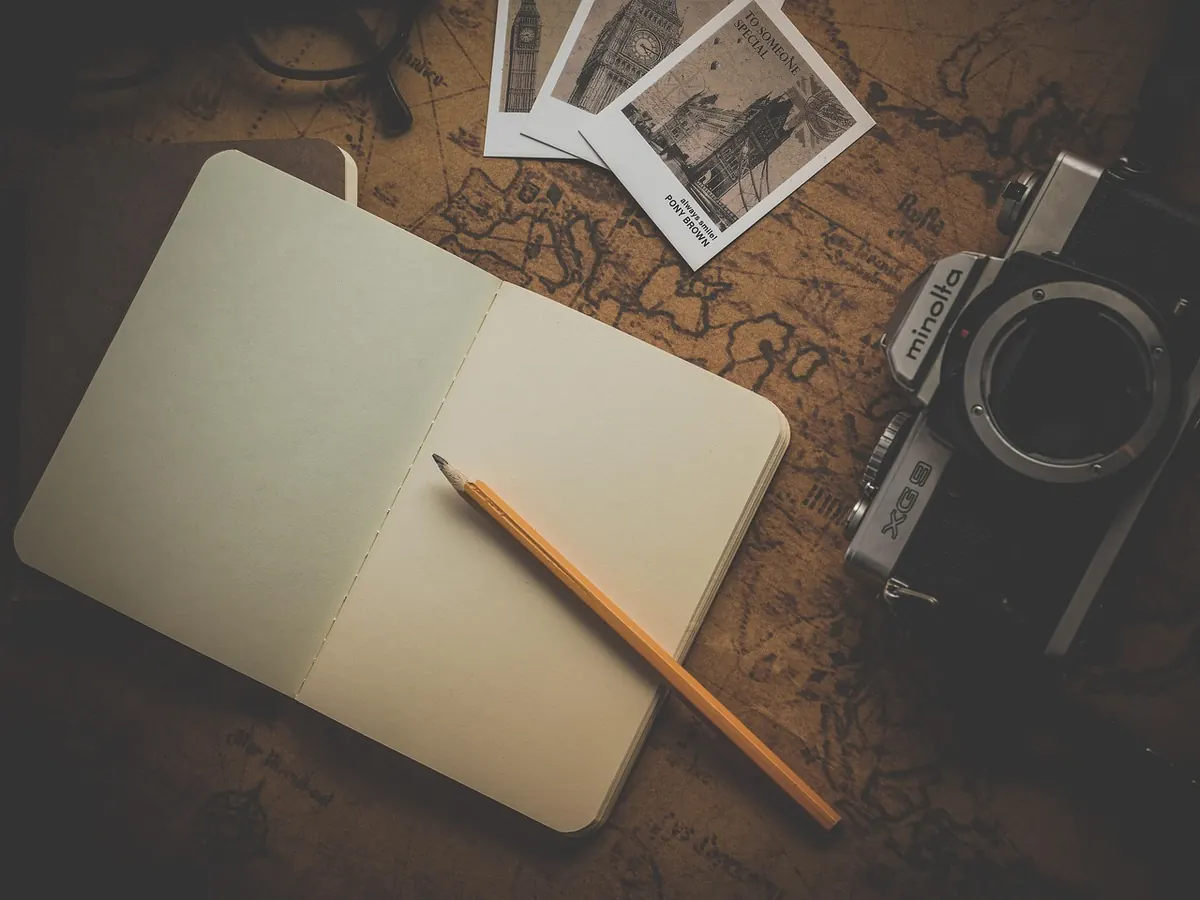
The table wobbles, the coffee is going cold, and you have twenty minutes before the bus leaves. In front of you sits a stack of postcards showing the harbor, one sheet of airmail paper, and a pen that is starting to run dry. Something is getting written. The only question is what.
Postcards and letters are not rivals, and neither is the better choice. They simply carry different amounts of room, cost, and meaning. Match the format to the person and the message, and you can stop deliberating and start writing.
What Fits on a Postcard, and What Needs an Envelope
A postcard gives you roughly sixty to eighty words before your handwriting starts shrinking. That is enough for a scene, a feeling, and a greeting. It is not enough for a story. Something like this lands beautifully:
The plum tart downstairs was worth the walk, and the swallows go completely mad over the fountain at dusk. Thinking of you.
What does not land is an attempt to summarize ten days in four lines. You end up with a list of place names and no voice in it.
Letters reward anyone with something to tell. The train you missed, the couple you met at the guesthouse, the afternoon it rained so hard you read an entire paperback in a laundromat. A letter lets you build a scene, backtrack, and add a joke in the margin. If your update runs past a paragraph, or if you keep crossing things out because there is no room, that is your answer: use an envelope.
Cost and Materials: The Practical Difference
A postcard is usually the cheaper item on both ends of the trip. The card itself tends to cost less than a folded greeting card, and many postal services charge a lower rate for postcards than for letters. But rates differ from country to country and change regularly, and some places charge the same for both. Check the current price at a post office window or on the national postal service website rather than trusting a hotel clerk's memory.
Letters cost more in two ways. You need an envelope, and weight counts. Three pages of journaling plus a photograph can push you into a higher international bracket faster than people expect. The envelope earns its keep, though. Postcards travel naked through sorting machines, rain, and the bottom of a mailbag. They arrive creased, smudged, and occasionally missing a corner. Some people treasure that battered look. If you want the contents kept intact, wrap them up.
One tip worth the detour: buy stamps at an actual post office, not the hotel front desk or a souvenir shop. Gift-shop stamps are sometimes marked up or come in the wrong denominations, which means your card arrives with postage due or not at all.
Privacy: What the Mail Carrier Also Reads
A postcard is a small public document. Everyone who handles it can read it — postal workers, the person who sorts your building's mail, a curious housemate. Most of the time that is a feature. Postcards are meant to be open and cheerful, and nobody is scandalized by a note about the weather.
Some things still do not belong on the back of a card. Hotel names with room numbers. Exact dates your apartment will be empty. News about a breakup, a diagnosis, or a job you are about to quit. If your household shares a mailbox and you would rather your brother did not read it first, that is a letter.
There is a second layer to this. A postcard pictures where you are. Usually that is the entire point, but if you would rather not announce your location while you are still standing in it, wait until you get home to mail it, or choose a card with a generic design.
Emotional Impact: Fast Versus Lasting
Postcards hit quickly. They are light, spontaneous, and they sit on a fridge or a desk where they get seen a hundred times. A good one feels like a wave from across an ocean: I thought of you while standing somewhere beautiful.
Letters hit deeper and slower. Someone gave you twenty minutes, a stamp, and an envelope, and that carries weight. Letters get reread, kept in drawers, and found again years later. There is also a quiet bonus to writing from vacation: your letter often arrives after you are home, which gives the trip a second life through someone else's reading of it.
The effect on the sender matters too. Sitting on a bench for half an hour with a pen changes the pace of a travel day. It is a rest stop with a purpose, and you tend to notice more than you would while photographing everything.
How to Decide in Ten Seconds
Send a postcard when
- You want to reach several people with the same short update.
- The recipient displays mail, collects cards, or has a child who likes the picture.
- You are short on time and long on scenery.
- The message is light: weather, food, a funny detail, a view.
Send a letter when
- You have a story that needs paragraphs.
- The news is private, sensitive, or complicated.
- You are writing to someone who lives alone, has had a hard year, or is unwell — length itself signals care.
- You want the words kept rather than displayed.
And sending both is perfectly reasonable. A postcard to the whole household, a letter to one person inside it. Nobody has ever been annoyed by receiving two pieces of mail.
Mailing from the Road Without the Fuss
A few habits make vacation mail far more likely to arrive:
- Buy stamps early, and buy extras. Post offices keep limited hours, and small towns sometimes have nothing but a slot in a wall.
- Write the address completely. Block capitals for the final lines, with the country named in English. A missing postal code or country is the most common reason vacation mail never shows up.
- Write the card the day you buy it. Cards purchased on day two and mailed on day twelve usually go home in a suitcase instead.
- Photograph what you wrote. If it disappears in transit, at least you still have the words.
- Ask when the postbox is emptied. Collection times vary wildly, and a card dropped after Friday's last pickup may sit until Monday.
Whichever format you choose, the point is identical: a piece of paper in your handwriting, arriving in someone's hands for no reason except that you thought of them. Postcards win on speed and charm. Letters win on room and weight. Most trips have space for a couple of each, and the people on your list will not be comparing them anyway.
Photo: DariuszSankowski / Pixabay